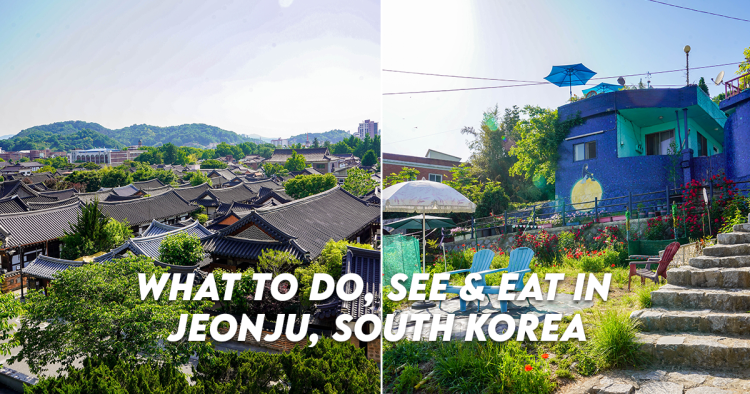

For those who are keen to dive into and learn more about Korea’s history, a short trip to Jeonju is essential. Just over a 2.5 hour train ride from Seoul, Jeonju is considered one of Korea’s most beautiful places of history and is best known for the Jeonju Hanok Village, which comprises more than 800 hanoks. Apart from this, Jeonju is also recognised for the significant role it has played in the development of Korean cuisine by being the cradle of bibimbap and makgeolli.
Curious to find out what else Jeonju in South Korea has to offer? Here are 10 Things To Do, See & Eat In Jeonju which you can easily cover in a day trip.

#1 JEONJU HANOK VILLAGE
No one can claim to have visited Jeonju without spending some time at the Jeonju Hanok Village. Comprising approximately 700 hanok buildings, Jeonju Hanok Village is considered Korea’s largest and only modern yet traditional hanok village. Apart from exploring the various cultural heritage sites here, you can look forward to participating in traditional craft activities, games, workshops and also wear a hanbok during your entire visit.
Jeonju Hanok Village
99 Girin-daero, Wansan-gu, Jeonju-si,
Jeonbuk-do, South Korea

#2 JEONJU HANOK VILLAGE HISTORY MUSEUM
For those keen on gaining insights into the history of the Jeonju Hanok Village, do consider walking through the Jeonju Hanok Village History Museum, a small space which chronicles this hanok village’s history. And don’t fret about not being able to understand Korean; the exhibits at this museum are accompanied by short English write-ups.
Jeonju Hanok Village History Museum
17-10 Choemyeonghui-gil, Pungnam-dong,
Wansan-gu, Jeonju-si, South Korea

#3 GYEONGGIJEON SHRINE
The Gyeonggijeon Shrine is a registered historic site erected in 1410 which is home to the portrait of King Tae-jo, who is known for being the founder of the Joseon dynasty. It is also housed within the Gyeonggijeon Palace, which takes up one fifth of the Jeonju Hanok Village. It is also incredibly spacious with lots of room for children to run and play in nature.


Housed within the Gyeonggijeon Palace (which occupies a fifth of the Jeonju Hanok Village), visitors can look forward to visiting the Royal Portrait Musem, viewing the Main Hall, the Hongsalmun Gate (which is said to stop ghosts from entering the sacred grounds of Gyeonggijeon), the Jeonju Sago (which is where important books such as the Annals of the Joseon Dynasty were kept) and more.
Gyeonggijeon Shrine
44 Taejo-ro, Wansan-gu, Jeonju-si,
Jeonbuk-do, South Korea

#4 GYODONG SEOKGALBI
We cannot emphasize this enough. Fans of galbi must have a meal at Gyodong Seok-galbi, a humble galbi restaurant situated in the heart of the Jeonju Hanok Village. During our visit, this restaurant was occupied by more tourists than locals, so this is the best indication that the food in this restaurant is good.

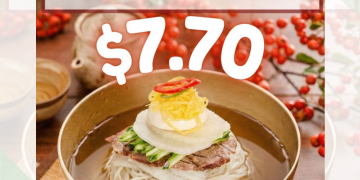
You must order the Tteokgalbi when at Gyodong Seokgalbi. Trust us, you will not regret it. The sweet marinade of the Tteokgalbi was incredibly delicious, and every single slice of grilled meat was tender and juicy. Other dishes that you can order to enjoy with the Tteokgalbi include the Jeonju Bimbimbab and naengmyeon.
Gyodong Seokgalbi
26 Taejo-ro, Pungnam-dong, Wansan-gu,
Jeonju, Jeollabuk-do, South Korea

#5 GANGNAM CALLIGRAPHY MUSEUM
Established in 1995, the Gangnam Calligraphy Museum is the only calligraphy museum in Korea. It is also home to more than 1,000 calligraphy works by notable artists such as Kim Jeong-hee, Lee Sam-man, Kim Hong-do and Jeong Yak-yong. Should you be keen on the art, you may be able to take part in one-day calligraphy courses during your visit. Entrance to this museum is free.
Gangnam Calligraphy Museum
74 Jeonjucheondong-ro, Wansan-gu,
Jeonju-si, South Korea

#6 JEONMANG CAFE
To enjoy one of the best views of the Jeonju Hanok Village alongside a fragrant cup of coffee and sliced cake, head up to the cafe situated at the 4th and 5th floors of Jeonmang. Jeonmang Cafe carries a decent spread of drinks which will appeal to the family, from ades, smoothies and different types of tea.

Depending on the weather, diners can choose to enjoy the views of Jeonju Hanok Village indoors or outdoors on the terrace. We also appreciated the large cafe space which equates to ample seating for the times when you need to escape the rain or the sweltering sun.
Jeonmang Cafe
89 Hanji-gil, Wansan-gu, Jeonju,
Jeollabuk-do 55041, South Korea

#7 JAMAN MURAL VILLAGE
If you’re travelling with young children or are interested in enjoying colourful wall murals, time at the Jaman Mural Village is essential. Located a short walk away from the Jeonju Hanok Village, visitors will be treated to endless wall murals which are based on our favourite childhood characters (cue Ponyo, Doraemon and Spiderman) whilst climbing up the steep hill to the top of the village.


Looking for a place to take a break after snapping pictures with the wall murals? Cafe hoppers would be pleased to note that there are quite a few cafes nestled within the Jaman Mural Village which offer decent cafe drinks and desserts with excellent views of the area.
Jaman Mural Village
1-10 Jamandong 1-gil, Wansan-gu,
Jeonju-si, Jeonbuk-do, South Korea

#8 JEONJUCHUN RIVER, CHEONGYEONRU PAVILLION & NAMCHEONGYO BRIDGE
The Jeonjuchun River is a river that runs right through Jeonju, and flows under the Namcheongyo Bridge. On hot days, you’d find visitors frequenting the river and dipping their feet, or their whole bodies, into the river to cool down. As there are paved paths at the perimeter of the river, there is also the option of cycling down the path to take in the sights of Jeonju’s scenery and to visit the Jeonju Ecomuseum.


If you don’t intend to be in close proximity with the Jeonjucheon River, the next best place to appreciate its views would be from the Cheongyeonru Pavillion on the Namcheongyo Bridge (which is also the main bridge connecting visitors to the entrance of Jeonju Hanok Village).
And for those travelling with kids, you’d be pleased to note that there is also a small section of books located near one of the entrances at the Cheongyeonru Pavillion. However, do bear in mind that most of the titles are in Korean, which may not be suitable for your children. Entrance to the Cheongyeonru Pavillion is free, but visitors will be required to remove their shoes prior to stepping onto the Cheongyeonru Pavillion.
Namcheongyo Bridge
192-4 Gyo-dong, Wansan-gu, Jeonju-si,
Jeonbuk-do, South Korea

#9 PUNGNAMMUN GATE
Built during the Josen dynasty in 1734 and a designated national treasure, Pungnammun Gate is the south gate of Jeonju Castle and is also the castle’s last gate standing gate today. The name “Pungnammun” can be translated as the resilient south gate of Jeonju, and this gate certainly deserves its name given the fire damage that it has experienced in 1767 and during the Imjin War. And if you approach the gate from the square in front of it, this is where you’d discover the Statue of Peace, a memorial to the Korean who made certain sacrifices during the war between 1932 and 1945.
Pungnammun Gate
1 Pungnammun 3-gil, Wansan-gu, Jeonju-si,
Jeonbuk-do, South Korea

#10 NAMBU MARKET
One of the best places to dine and shop at in Jeonju has to be the Nambu Market. This market is home to about 800 stores which sell vegetables, fruits, food, dried fish, furniture, silk goods and other general goods. On the 2nd floor, there is also a Youth Market with vibes which resemble the streets of Hongdae in Seoul.

Food-wise, it would be best to visit Nambu Market during their bustling night market which is held on Fridays and Saturdays. During your visit, be sure to sample the range of traditional dishes such as the mung bean pancake, and also enjoy fusion dishes such as the bibimbap wrapped in rice paper. If you’re fortunate, you may even be able to eat your food whilst watching a street concert.
Nambu Market
19-3 Pungnammun 1-gil, Wansan-gu,
Jeonju-si, Jeonbuk-do, South Korea